
Trade vs Retail Paint: Why It Matters for Your Home
When planning a decorating project, one of the most common questions homeowners ask is why a professional painter and decorator prefers “Trade” paint over the “Retail” brands found in local DIY stores. While the names on the tins may look similar, the chemical formulations are vastly different.
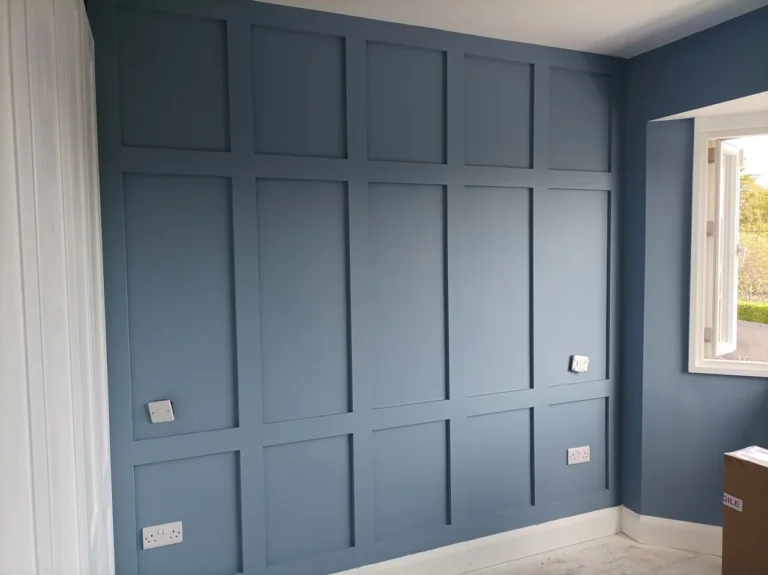
Should I provide the paint myself, or should the decorator supply it?
We strongly recommend that we supply the paint. At Superior Property Maintenance & Improvements, Nathan Steans uses his 32+ years of experience to select only the highest quality trade materials. Understanding these differences will help you see why a professional application provides a more durable, vibrant and cost-effective finish for your home.
1. What is the Core Difference?
The primary difference between trade and retail paint lies in the pigment and resin content.
- Retail Paint: Often formulated to be easier for amateurs to apply, these paints often contain more water and “fillers”. While this makes the paint cheaper per tin, it often requires more coats to achieve a solid colour.
- Trade Paint: Designed for professional use, these paints have a significantly higher concentration of high-quality pigments and resins. This results in superior “opacity” (the ability to hide the previous colour) and a much tougher final surface.
2. Opacity and Coverage
Because trade paint is more concentrated, it provides significantly higher coverage than retail alternatives.
- Fewer Coats: A professional-grade trade emulsion can often achieve a perfect finish in just two coats, whereas a retail version may require three or even four to cover a dark or bold wall colour.
- Uniform Finish: The higher pigment levels in trade paint ensure a more uniform, “solid” appearance across large wall surfaces, preventing the patchy or “shadowy” look often seen with DIY paint jobs.
3. Durability and Washability
One of the most important reasons to choose trade paint is its long-term performance in a busy home.
- Scrub Resistance: Modern trade paints, such as “Durable Matt” or “Scrubbable” emulsions, are engineered to be cleaned with a damp cloth without the paint rubbing off or becoming shiny.
- Woodwork Protection: Trade-grade satin and eggshell finishes for skirting boards and doors are far more resistant to the scuffs, knocks, and yellowing that often affect retail gloss paints.
4. Is Trade Paint More Expensive?
While a single tin of trade paint often has a higher price tag than a retail equivalent, it is almost always more cost-effective for your project.
- Less Product Needed: Because trade paint covers better, you need fewer tins to finish a room.
- Labour Efficiency: For a professional decorator like Nathan, using high-quality materials means the job is completed faster and with a superior result, providing better value for the client.
- Longevity: Because the finish is tougher and more fade-resistant, your home will not need repainting as frequently, saving you money over the life of your property.
5. Why Expertise is Required
Trade paint is a professional tool. Because it is more concentrated and often thicker than retail paint, it requires specific application techniques, such as correct thinning and precise brushwork, to achieve a smooth, high-end result. Nathan’s 32+ years of painting and decorating experience ensure that these premium materials are applied perfectly to every surface in your home.
Experience the Difference of a Professional Finish
Don’t settle for “retail” results when your home deserves a trade-quality transformation.